

Modern businesses generate and manage unprecedented volumes of data, creating critical challenges around storage, accessibility, and security. Online storage solutions have therefore evolved from simple file repositories into sophisticated platforms that address compliance requirements, operational efficiency, and collaborative workflows. Furthermore, organisations across Europe increasingly prioritise data sovereignty and regulatory compliance when selecting their storage infrastructure. This comprehensive examination explores the architecture, security considerations, and strategic implementation of online storage solutions for business environments in 2026.
Understanding Online Storage Architecture
The foundation of effective cloud storage rests on three primary architectural models, each designed for specific use cases and performance requirements. Object storage, block storage, and file storage represent fundamentally different approaches to organising and retrieving information.
Object Storage for Scalability
Object storage systems store data as discrete units with metadata and unique identifiers, enabling virtually unlimited scalability. Moreover, this architecture powers most modern online storage solutions because it handles unstructured data efficiently. Each object contains the data itself, extensive metadata describing the content, and a globally unique identifier for retrieval.
Key characteristics of object storage include:
- Horizontal scalability across distributed infrastructure
- Rich metadata capabilities for classification and search
- Eventual consistency models for global distribution
- RESTful API access for application integration
- Cost-effective storage of large volumes
Nevertheless, object storage introduces latency compared to block storage, making it less suitable for transactional databases. Therefore, organisations typically deploy object storage for archives, media libraries, backups, and collaborative document repositories where throughput matters more than millisecond-level response times.

Block and File Storage Alternatives
Block storage divides data into fixed-size blocks, each with a unique address, allowing operating systems to manage storage as they would local disks. In addition, this model delivers the low latency required for databases, virtual machines, and transactional applications. Furthermore, block storage supports advanced features like snapshots, cloning, and replication at the storage layer.
File storage, conversely, organises data hierarchically in folders and directories, mirroring traditional file systems. This familiar structure simplifies migration from on-premises environments and supports standard network protocols like SMB and NFS. Nevertheless, file storage typically scales less effectively than object storage, making it more suitable for departmental shares and structured document management rather than massive data lakes.
| Storage Type | Best Use Cases | Scalability | Access Method | Latency |
|---|---|---|---|---|
| Object | Archives, media, backups, collaboration | Excellent (petabyte+) | HTTP/REST API | Medium |
| Block | Databases, VMs, applications | Good (terabyte) | iSCSI, Fibre Channel | Very low |
| File | Shared folders, home directories | Moderate | SMB, NFS, WebDAV | Low |
Security and Compliance Foundations
Security considerations dominate the selection and implementation of online storage solutions, particularly for organisations handling sensitive business data or personal information. Moreover, the regulatory landscape in 2026 demands comprehensive data protection measures that extend beyond encryption to encompass access controls, audit trails, and data residency requirements.
Encryption Standards and Implementation
Modern online storage solutions implement encryption at multiple layers, starting with data in transit and extending to data at rest. Transport Layer Security (TLS) 1.3 has become the minimum standard for encrypting data during transmission, whilst AES-256 encryption protects stored data. Furthermore, advanced platforms offer client-side encryption, ensuring data remains encrypted even from the storage provider itself.
Essential encryption layers include:
- Transport encryption using TLS 1.3 for all network communications
- Server-side encryption with AES-256 for data at rest
- Client-side encryption for zero-knowledge architectures
- Encrypted backups maintaining protection across disaster recovery copies
- Key management systems separating encryption keys from encrypted data
The NIST SP 800-209 guidelines provide comprehensive security frameworks for storage infrastructure, covering threat models, security controls, and architectural considerations. Therefore, organisations implementing online storage solutions should align their security posture with these established standards to ensure robust protection against evolving threats.
GDPR and Data Sovereignty Requirements
European businesses face stringent requirements under the General Data Protection Regulation, which mandates specific controls around personal data processing and storage. In addition, data sovereignty concerns have intensified following various international data transfer rulings, making the physical location of data centres a critical selection criterion.
Online storage solutions serving European organisations must demonstrate compliance across several dimensions. The legal basis for processing must be documented, data subject rights must be technically enforceable, and breach notification procedures must be established. Nevertheless, many global providers struggle with conflicting legal obligations, particularly when subject to extraterritorial legislation like the US CLOUD Act.
Therefore, European businesses increasingly select providers operating exclusively within EU jurisdiction, ensuring that data remains protected by European privacy law without conflicting obligations. Furthermore, ISO 27001 certification of data centres provides independent verification of information security management systems, whilst regular compliance audits demonstrate ongoing adherence to regulatory requirements.

Performance Optimisation and Availability
The operational characteristics of online storage solutions directly impact business productivity, making performance and availability critical evaluation criteria. Moreover, organisations must balance cost considerations against service level requirements when architecting their storage strategy.
Designing for High Availability
High availability in online storage solutions depends on redundancy across multiple dimensions: storage media, network paths, power systems, and geographic locations. In addition, best practices for storage performance emphasise designing applications to handle eventual consistency and implementing appropriate retry logic for transient failures.
Availability design patterns include:
- Geographic redundancy across multiple data centres
- Redundant network connectivity with automatic failover
- Real-time replication for mission-critical data
- Automated health monitoring and alerting
- Regular disaster recovery testing and validation
Service level agreements typically guarantee 99.9% to 99.99% uptime for business-grade online storage solutions, translating to 8.76 hours to 52.56 minutes of acceptable downtime annually. Nevertheless, organisations should evaluate SLAs carefully, understanding exclusions, measurement methodologies, and remedy provisions for service failures. Furthermore, critical applications may warrant multi-cloud or hybrid architectures to eliminate single points of failure.
Optimising Access Patterns and Costs
Storage costs in cloud environments vary significantly based on access frequency, retrieval speed, and data volume. Therefore, online storage solutions typically offer multiple storage tiers with different pricing structures. Hot storage provides immediate access at premium prices, whilst cold and archive tiers dramatically reduce costs for infrequently accessed data.
Intelligent tiering strategies automatically migrate data between storage classes based on access patterns, optimising costs without manual intervention. In addition, lifecycle policies can automatically delete or archive data after specified retention periods, ensuring compliance whilst controlling storage growth. Nevertheless, retrieval fees for cold storage can accumulate quickly if access patterns change unexpectedly, making capacity planning and usage monitoring essential.
| Storage Tier | Access Time | Relative Cost | Best For |
|---|---|---|---|
| Hot | Immediate | Highest | Active projects, collaboration |
| Cool | Seconds | Medium | Monthly access, older projects |
| Cold | Minutes | Low | Quarterly access, compliance archives |
| Archive | Hours | Lowest | Long-term retention, legal holds |
Integration and Workflow Considerations
Effective deployment of online storage solutions extends beyond technical implementation to encompass workflow integration, user adoption, and change management. Moreover, the value proposition of cloud storage materialises only when teams actively utilise the platform for collaboration and information sharing.
Application Integration Patterns
Modern online storage solutions expose comprehensive APIs enabling integration with business applications, automation platforms, and custom workflows. RESTful APIs following OpenAPI specifications allow developers to build storage capabilities directly into line-of-business applications. Furthermore, webhook notifications enable event-driven architectures where storage operations trigger downstream processes automatically.
Common integration patterns include document generation workflows where applications create files directly in shared storage, backup automation where databases and systems replicate to cloud storage on schedules, and content distribution where storage serves as the origin for web applications and media delivery networks. In addition, platforms like vBoxxCloud extend basic storage with built-in features like eIDAS-compliant digital signing and AI-assisted document search, reducing the integration complexity for common business workflows.
Migration Strategies and Change Management
Migrating from traditional file servers or legacy online storage solutions requires careful planning to minimise disruption whilst ensuring data integrity. Therefore, successful migrations typically follow phased approaches, beginning with non-critical data and expanding to production workloads as confidence builds. Furthermore, parallel operation periods allow teams to validate functionality before decommissioning legacy systems.
Migration best practices include:
- Comprehensive data inventory and classification
- Bandwidth assessment and transfer schedule planning
- Permissions mapping from existing systems
- Pilot groups testing functionality before full rollout
- Training programmes ensuring user competency
- Rollback procedures for unexpected issues
Nevertheless, user adoption presents the primary challenge in storage migrations, particularly when interfaces and workflows differ from established practices. Therefore, change management efforts should emphasise benefits rather than features, demonstrating how online storage solutions solve actual pain points like version conflicts, access limitations, or collaboration friction.
Advanced Capabilities and Future Directions
Online storage solutions continue evolving beyond simple file repositories toward intelligent platforms that actively assist knowledge work and business processes. Moreover, artificial intelligence integration, advanced search capabilities, and automated workflows distinguish modern platforms from commodity storage services.
Intelligent Search and Classification
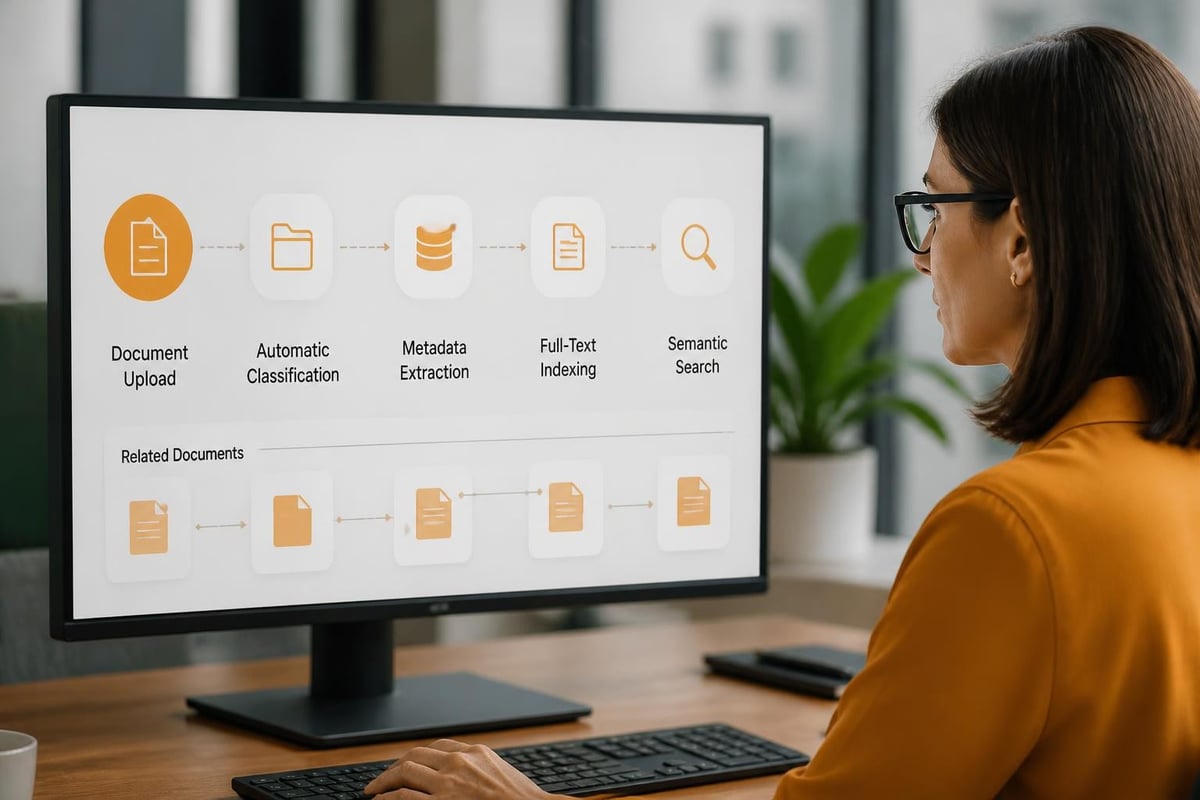
Traditional folder hierarchies and filename-based search prove inadequate for organisations managing thousands of documents across multiple projects and departments. Therefore, advanced online storage solutions implement full-text indexing, metadata extraction, and semantic search capabilities that understand content context rather than merely matching keywords.
AI-powered features analyse document contents automatically, extracting entities, dates, and key concepts for enhanced searchability. Furthermore, machine learning models can classify documents by type, identify sensitive information requiring protection, and suggest relevant content based on working context. Nevertheless, these capabilities require careful implementation to respect privacy requirements and avoid inappropriate content exposure.
The Cloud Security Alliance guidance addresses data classification and information lifecycle management in cloud environments, providing frameworks for implementing intelligent categorisation whilst maintaining security controls. In addition, organisations should establish clear policies around automated processing of business documents, particularly when AI systems access potentially confidential information.
Compliance Automation and Audit Trails
Regulatory compliance increasingly demands detailed documentation of data handling, access patterns, and retention decisions. Therefore, modern online storage solutions maintain comprehensive audit logs recording every access, modification, and deletion with timestamps and user attribution. Furthermore, automated retention policies enforce legal hold requirements and defensible deletion schedules without manual intervention.
Compliance automation features include:
- Immutable audit trails resistant to tampering
- Automated retention and deletion based on data classification
- Legal hold capabilities suspending normal lifecycle policies
- Access reviews identifying dormant or excessive permissions
- Compliance reporting for regulatory submissions
- Data lineage tracking showing information flow
Nevertheless, audit capabilities prove valuable only when organisations actively review logs and investigate anomalies. Therefore, security information and event management (SIEM) integration allows correlation of storage access patterns with broader security monitoring, identifying potential data exfiltration or unauthorised access attempts.
Vendor Selection and Evaluation Criteria
Selecting appropriate online storage solutions requires systematic evaluation across technical, commercial, and strategic dimensions. Moreover, the long-term nature of storage commitments means migration costs create substantial switching friction, making initial selection decisions particularly consequential.
Technical Evaluation Framework
Technical assessments should verify that platforms meet functional requirements whilst providing sufficient flexibility for future needs. Performance testing under realistic workloads reveals how systems handle concurrent users, large file operations, and peak demand periods. Furthermore, security audits should validate encryption implementation, access controls, and compliance certifications.
Critical technical evaluation criteria:
| Criterion | Evaluation Method | Acceptable Threshold |
|---|---|---|
| Upload performance | Timed 1GB file transfer | < 2 minutes (100Mbps) |
| Concurrent users | Load testing with typical usage | No degradation to 100 users |
| API availability | Historical uptime metrics | > 99.9% monthly |
| Encryption strength | Security documentation review | AES-256 minimum |
| Recovery time objective | Disaster recovery testing | < 4 hours for critical data |
| Search accuracy | Relevance testing with sample documents | > 90% precision |
The European cybersecurity guidance from ENISA provides frameworks for evaluating cloud service security and trustworthiness, particularly relevant for organisations subject to NIS2 or other European regulatory requirements. In addition, vendor security questionnaires should address data residency, subprocessor management, and incident response procedures.
Commercial and Strategic Considerations
Pricing models for online storage solutions vary from simple per-gigabyte rates to complex structures incorporating storage tiers, API calls, data transfer, and additional features. Therefore, organisations must model total cost of ownership across realistic usage scenarios, including growth projections and seasonal variations. Furthermore, contract terms should provide flexibility to adjust capacity and features as business requirements evolve.
Strategic considerations extend beyond immediate requirements to evaluate vendor stability, product roadmaps, and ecosystem compatibility. Lock-in risks arise from proprietary APIs, non-standard protocols, or features unavailable elsewhere, making migration difficult if vendor relationships deteriorate. Nevertheless, standardised protocols and export capabilities mitigate these concerns whilst preserving access to advanced platform-specific features.
European organisations should particularly evaluate data protection practices, considering whether providers operate under exclusively European jurisdiction or face conflicting legal obligations. Furthermore, sustainability commitments and green hosting practices increasingly influence vendor selection as organisations address environmental, social, and governance objectives.
Backup and Business Continuity Integration
Online storage solutions serve critical roles in backup and disaster recovery strategies, yet organisations must recognise that cloud storage alone does not constitute adequate data protection. Therefore, comprehensive approaches implement the 3-2-1 backup rule: three copies of data, on two different media types, with one copy offsite.
Protecting Cloud-Hosted Data
Applications hosted in cloud platforms like Microsoft 365 or Google Workspace require dedicated backup solutions because native retention capabilities prove insufficient for comprehensive data protection. Accidental deletion, retention policy gaps, and security incidents necessitate independent backup copies under organisational control. Furthermore, backup services for Microsoft 365 and Google Workspace address these requirements with automated protection of email, documents, and collaboration data.
Cloud-to-cloud backup capabilities include:
- Automated daily backups of all data types
- Point-in-time recovery for granular restoration
- Legal hold and compliance retention
- Protection against ransomware and malicious deletion
- Independent storage separate from primary platform
- Cross-platform recovery enabling migration
Nevertheless, backup retention policies must balance storage costs against compliance and operational recovery requirements. Therefore, organisations typically implement tiered retention with recent backups maintained for quick recovery whilst older versions migrate to archive storage for cost efficiency.
Disaster Recovery Planning
Disaster recovery procedures must address complete service failures, not merely individual file restoration. Therefore, comprehensive plans document recovery time objectives, recovery point objectives, and specific procedures for various failure scenarios. Furthermore, regular testing validates that backups remain viable and staff understand recovery processes.
Testing methodologies range from simple file restoration exercises to full-scale disaster simulations involving complete service rebuilds. In addition, documentation should address dependencies, communication protocols, and decision-making authority during incidents. Nevertheless, many organisations discover gaps only during actual incidents, making proactive testing essential rather than optional.
Selecting and implementing appropriate online storage solutions requires careful evaluation of architecture, security, compliance, and operational requirements aligned with specific business contexts. European organisations benefit particularly from providers offering GDPR-compliant infrastructure, data sovereignty guarantees, and robust security frameworks without conflicting legal obligations. vBoxx delivers comprehensive cloud solutions including secure storage, collaboration tools, and backup services from ISO 27001-certified data centres in the Netherlands, combining European data protection with enterprise-grade reliability and green hosting practices. Contact vBoxx today to discuss how their platform can support your organisation's digital infrastructure requirements whilst maintaining the highest standards of privacy and security.