
Cloud computing has fundamentally transformed how organisations store, process, and manage their data. Nevertheless, this digital revolution brings significant security challenges that demand careful attention. Furthermore, as businesses migrate critical workloads to cloud environments, the intersection of cybersecurity with cloud computing becomes increasingly vital for protecting sensitive information, maintaining regulatory compliance, and ensuring business continuity. Therefore, understanding the unique security requirements of cloud platforms is no longer optional but essential for organisations of all sizes.
Understanding the Cloud Security Landscape
The cloud computing model presents a fundamentally different security paradigm compared to traditional on-premises infrastructure. Moreover, the shared responsibility model means that whilst cloud providers secure the underlying infrastructure, organisations remain accountable for protecting their data, applications, and access controls.
The Shared Responsibility Framework
In cloud environments, security responsibilities are divided between the provider and the customer. Therefore, understanding where your obligations begin and end is crucial for implementing effective cybersecurity with cloud computing strategies.
| Responsibility Area | Provider | Customer |
|---|---|---|
| Physical infrastructure | ✓ | – |
| Network security | ✓ | Partial |
| Application security | – | ✓ |
| Data encryption | Partial | ✓ |
| Identity management | – | ✓ |
| Compliance monitoring | Partial | ✓ |
Furthermore, this division varies depending on the service model you adopt. Infrastructure as a Service (IaaS) places more responsibility on the customer, whilst Software as a Service (SaaS) shifts more to the provider. Nevertheless, data protection remains consistently your responsibility regardless of the model.
Common Cloud Security Threats in 2026
Today's threat landscape continues to evolve rapidly. Moreover, attackers increasingly target cloud environments due to the concentration of valuable data and the complexity of distributed systems.
Primary threat vectors include:
- Data breaches resulting from misconfigured storage buckets or weak access controls
- Account hijacking through credential theft or social engineering attacks
- Insider threats from employees with excessive permissions
- API vulnerabilities exposing sensitive data or functionality
- Ransomware attacks targeting cloud-stored backups and production data
- Supply chain compromises affecting third-party integrations
In addition, the rise of artificial intelligence has introduced both protective capabilities and new attack surfaces that organisations must address.
Essential Security Measures for Cloud Environments
Implementing robust cybersecurity with cloud computing requires a multi-layered approach that addresses technical, procedural, and human factors. Therefore, organisations must adopt comprehensive strategies rather than relying on single-point solutions.
Data Encryption and Protection
Encryption serves as the foundation of cloud data security. Furthermore, implementing encryption both in transit and at rest ensures that even if unauthorised parties gain access to your data, they cannot read it without the proper decryption keys.
Critical encryption practices include:
- End-to-end encryption for data from creation through transmission to storage
- Customer-managed encryption keys to maintain control over access
- Certificate-based authentication for secure communications
- Regular key rotation to limit exposure from potential compromises
- Encryption of backup data to protect recovery points
Moreover, European organisations must ensure their encryption standards align with GDPR requirements. In addition, businesses subject to sector-specific regulations face additional encryption mandates that must be carefully implemented.

Identity and Access Management
Controlling who can access your cloud resources represents one of the most critical aspects of cybersecurity with cloud computing. Therefore, implementing robust identity and access management (IAM) policies prevents unauthorised access and limits the potential damage from compromised credentials.
Fundamental IAM principles:
- Multi-factor authentication (MFA) for all user accounts, especially privileged ones
- Role-based access control (RBAC) granting minimum necessary permissions
- Regular access reviews to remove unnecessary permissions
- Privileged access management with time-limited elevated credentials
- Single sign-on (SSO) integration for centralised authentication
Furthermore, organisations should implement continuous monitoring of access patterns to detect anomalous behaviour. Nevertheless, security measures must balance protection with usability to ensure employees can work efficiently.
Network Security and Segmentation
Cloud network security requires careful architecture and continuous monitoring. Moreover, proper network segmentation limits the potential spread of breaches and contains incidents to isolated environments.
| Security Layer | Purpose | Implementation |
|---|---|---|
| Firewalls | Control traffic flow | Virtual network appliances |
| VPNs | Secure remote access | Encrypted tunnels |
| Zero Trust | Verify all connections | Continuous authentication |
| Microsegmentation | Isolate workloads | Software-defined networks |
| DDoS protection | Prevent service disruption | Traffic filtering |
In addition, organisations should implement intrusion detection systems (IDS) and intrusion prevention systems (IPS) to identify and block malicious activity. Therefore, combining preventive and detective controls creates defence in depth.
Compliance and Regulatory Considerations
European businesses face stringent data protection requirements that directly impact their approach to cybersecurity with cloud computing. Furthermore, compliance failures can result in substantial fines and reputational damage.
GDPR Requirements for Cloud Security
The General Data Protection Regulation imposes specific obligations on organisations processing personal data in cloud environments. Moreover, these requirements extend to choosing appropriate cloud providers and implementing technical safeguards.
Key GDPR considerations include:
- Data processing agreements with cloud providers documenting responsibilities
- Data sovereignty ensuring personal data remains within permitted jurisdictions
- Breach notification procedures to meet 72-hour reporting requirements
- Data subject rights mechanisms for access, portification, and deletion requests
- Privacy by design incorporating protection into system architecture
Furthermore, organisations must conduct Data Protection Impact Assessments (DPIAs) when implementing new cloud services that process personal data. Nevertheless, working with European cloud providers can significantly simplify compliance efforts by ensuring infrastructure remains within EU jurisdiction.
Industry-Specific Security Standards
Beyond GDPR, various industries face additional compliance requirements. Therefore, organisations must ensure their cloud security measures address all applicable standards.
- ISO 27001 for information security management systems
- SOC 2 for service organisation controls
- NIS2 Directive for critical infrastructure operators
- PCI DSS for payment card data processing
- HIPAA for healthcare information (where applicable)
In addition, selecting cloud providers with relevant certifications demonstrates due diligence and simplifies audit processes. Moreover, providers operating ISO 27001-certified data centres offer independently verified security controls.
Data Backup and Disaster Recovery
Comprehensive cybersecurity with cloud computing must include robust backup and disaster recovery capabilities. Furthermore, recent ransomware trends targeting backup systems make this aspect particularly critical.
The 3-2-1 Backup Strategy
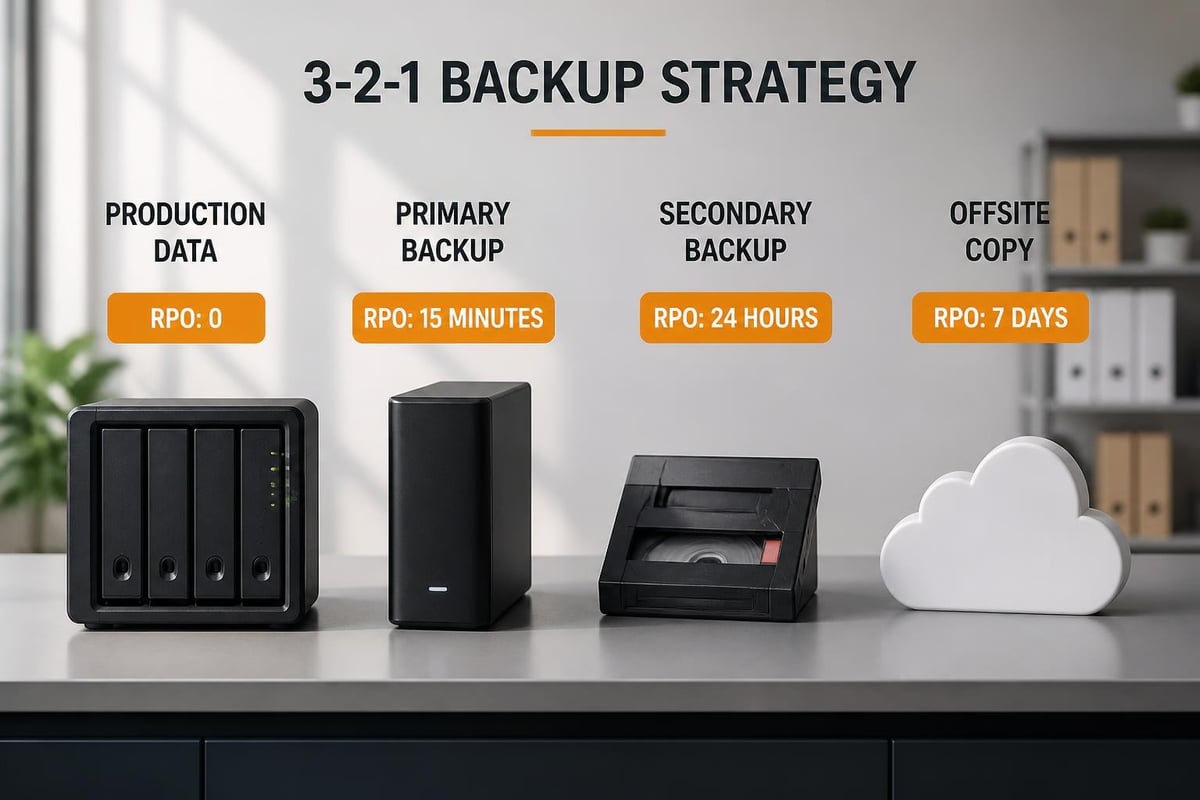
Despite cloud services offering built-in redundancy, organisations should not rely solely on provider protections. Therefore, implementing the 3-2-1 backup rule remains essential best practice.
The strategy requires:
- Three copies of your data (production plus two backups)
- Two different media types to protect against format-specific failures
- One offsite copy to protect against location-specific disasters
Moreover, organisations using cloud productivity suites like Microsoft 365 or Google Workspace often mistakenly believe their data is fully protected. Nevertheless, these platforms have limited retention policies and do not protect against accidental deletion, malicious insiders, or ransomware. Therefore, implementing dedicated backup solutions for Microsoft 365 and Google Workspace ensures comprehensive protection with GDPR-compliant European storage.
Recovery Planning and Testing
Backup systems prove worthless if you cannot successfully restore data when needed. Furthermore, organisations must regularly test their recovery procedures to ensure they work under pressure.
| Recovery Metric | Definition | Typical Target |
|---|---|---|
| Recovery Time Objective (RTO) | Maximum acceptable downtime | 4-24 hours |
| Recovery Point Objective (RPO) | Maximum acceptable data loss | 1-24 hours |
| Recovery Test Frequency | How often to verify restores | Quarterly |
In addition, documenting detailed recovery procedures ensures teams can respond effectively during incidents. Therefore, assigning clear roles and responsibilities prevents confusion during crisis situations.
Security Monitoring and Incident Response
Proactive monitoring represents a crucial component of cybersecurity with cloud computing. Moreover, early detection of security incidents significantly reduces potential damage and recovery costs.
Continuous Security Monitoring
Cloud environments generate vast amounts of log data that must be collected, analysed, and acted upon. Furthermore, automated monitoring tools can identify patterns and anomalies that human analysts might miss.
Essential monitoring activities include:
- Log aggregation from all cloud services and applications
- Real-time alerting for suspicious activities or policy violations
- Behavioural analytics to identify unusual user or system behaviour
- Vulnerability scanning to detect unpatched systems or misconfigurations
- Compliance monitoring to ensure ongoing adherence to requirements
Nevertheless, excessive alerts can lead to fatigue and missed genuine threats. Therefore, carefully tuning detection rules and prioritising high-risk events ensures security teams focus on what matters most.
Incident Response Procedures
When security incidents occur, organisations need clear procedures to contain damage, investigate root causes, and restore normal operations. Furthermore, documenting these procedures in advance ensures consistent and effective responses.
A typical incident response workflow includes:
- Detection and analysis to confirm the incident and assess scope
- Containment to prevent further damage or data loss
- Eradication to remove threats and close vulnerabilities
- Recovery to restore systems and verify normal operation
- Post-incident review to identify lessons and improve processes
In addition, organisations should maintain relationships with forensic specialists and legal counsel before incidents occur. Moreover, practising incident response through tabletop exercises builds team capabilities and confidence.
Securing Multi-Cloud and Hybrid Environments
Many organisations operate across multiple cloud providers or combine cloud and on-premises infrastructure. Therefore, cybersecurity with cloud computing becomes more complex in these distributed environments.
Challenges of Multi-Cloud Security
Operating across different cloud platforms introduces additional security considerations. Furthermore, each provider offers different security tools, APIs, and management interfaces.
Key multi-cloud challenges include:
- Inconsistent security policies across different platforms
- Complex identity management with multiple authentication systems
- Varied compliance certifications requiring separate documentation
- Increased attack surface from additional integration points
- Skills gaps requiring expertise across multiple platforms
Nevertheless, multi-cloud strategies offer benefits including avoiding vendor lock-in and selecting best-of-breed services. Therefore, organisations must balance these advantages against the additional security complexity.

Unified Security Management
To address multi-cloud complexity, organisations should implement unified security tools that work across platforms. Moreover, centralised dashboards and policies simplify management whilst maintaining consistent protection.
| Security Function | Multi-Cloud Approach | Benefit |
|---|---|---|
| Identity management | Federated SSO | Single authentication point |
| Policy enforcement | Cloud security posture management | Consistent controls |
| Monitoring | SIEM integration | Unified visibility |
| Compliance | Centralised reporting | Simplified audits |
Furthermore, cloud access security brokers (CASBs) provide visibility and control across multiple cloud services. In addition, these tools enforce data loss prevention policies and detect shadow IT usage.
The European Advantage in Cloud Security
For organisations prioritising data protection and privacy, European cloud providers offer distinct advantages related to cybersecurity with cloud computing. Furthermore, the regulatory landscape creates meaningful differences in how data can be accessed and protected.
Data Sovereignty and Jurisdiction
European cloud providers operating infrastructure within the EU provide clear jurisdictional benefits. Moreover, this ensures data remains subject to European privacy laws rather than conflicting foreign legislation.
Key sovereignty advantages include:
- Protection from the US CLOUD Act which can compel US-based providers to disclose data
- GDPR compliance as a default operational requirement rather than an add-on
- Local data residency meeting requirements for certain industries and jurisdictions
- European legal protections for privacy and data subject rights
- Transparent ownership without complex corporate structures spanning jurisdictions
In addition, the Schrems II decision has heightened awareness of international data transfer risks. Therefore, organisations increasingly prefer European providers to avoid complex standard contractual clause implementations and transfer impact assessments.
Privacy-First Infrastructure
European cloud providers often embed privacy protections into their fundamental architecture. Furthermore, this privacy-by-design approach differs significantly from retrofitting compliance onto platforms designed for different markets.
vBoxx, for instance, operates its own infrastructure in ISO 27001-certified data centres in the Netherlands, ensuring complete control over physical and digital security measures. Moreover, as a European company, vBoxx emphasises GDPR compliance, privacy protections, and green hosting practices whilst remaining outside the reach of conflicting foreign legislation.
Future Trends in Cloud Security
The landscape of cybersecurity with cloud computing continues evolving rapidly. Therefore, organisations must stay informed about emerging trends and prepare for future security challenges.
Artificial Intelligence and Machine Learning
AI technologies are transforming both security capabilities and threat sophistication. Furthermore, organisations must harness AI for defence whilst protecting against AI-powered attacks.
AI applications in cloud security include:
- Automated threat detection identifying patterns across massive datasets
- Predictive analytics forecasting potential vulnerabilities before exploitation
- Intelligent access controls adapting permissions based on context and risk
- Security orchestration automating routine response and remediation tasks
Nevertheless, AI systems themselves require security protections. Moreover, adversaries increasingly use machine learning to develop more sophisticated attacks, creating an ongoing technological arms race.
Zero Trust Architecture
The zero trust security model assumes breach and verifies every access request regardless of source. Furthermore, this approach aligns naturally with cloud computing's distributed, perimeter-less nature.
Zero trust principles include:
- Never trust, always verify every user, device, and application
- Least privilege access granting minimum necessary permissions
- Microsegmentation isolating resources and limiting lateral movement
- Continuous monitoring maintaining visibility across all systems
- Assume breach designing systems to contain and limit damage
In addition, implementing zero trust requires cultural change beyond technical controls. Therefore, organisations must invest in training and change management alongside technology deployments.
Quantum Computing Implications
Whilst practical quantum computers remain years away, their potential impact on encryption requires advance preparation. Moreover, organisations should begin planning for post-quantum cryptography transitions.
Quantum preparedness steps include:
- Cryptographic inventory documenting all encryption implementations
- Algorithm assessment identifying vulnerable cryptographic methods
- Migration planning preparing for post-quantum algorithm adoption
- Data classification prioritizing long-term sensitive information for early protection
Furthermore, regulatory bodies and standards organisations are developing post-quantum cryptography requirements. Therefore, staying informed about these developments ensures organisations can transition smoothly when necessary.
Effective cybersecurity with cloud computing requires combining robust technical controls, clear policies, and continuous vigilance across your entire infrastructure. Moreover, selecting the right cloud provider significantly impacts your security posture and compliance capabilities. vBoxx delivers comprehensive cloud solutions built on European infrastructure with ISO 27001-certified security, GDPR compliance, and privacy protections that align with your business requirements. Furthermore, with services spanning secure cloud storage, communication platforms, password management, and backup solutions, vBoxx provides the foundation for confident cloud adoption without compromising on security or sovereignty.