

The landscape of enterprise technology has fundamentally shifted over the past decade, with solutions cloud computing emerging as the cornerstone of modern business infrastructure. Organisations across Europe and beyond now face critical decisions about how to deploy, secure, and optimise their digital resources in an increasingly complex regulatory environment. Understanding the architecture, deployment models, and security frameworks that underpin effective cloud solutions has become essential for technology leaders, compliance officers, and business decision-makers alike. This comprehensive exploration examines the strategic considerations, technical foundations, and practical implementation pathways that define successful cloud computing solutions in 2026.
Understanding the Core Components of Solutions Cloud Computing
Solutions cloud computing encompasses far more than simply moving data to remote servers. Furthermore, it represents a fundamental rethinking of how organisations provision, consume, and manage computing resources. The NIST Cloud Computing Reference Architecture defines five essential characteristics that distinguish true cloud solutions: on-demand self-service, broad network access, resource pooling, rapid elasticity, and measured service.
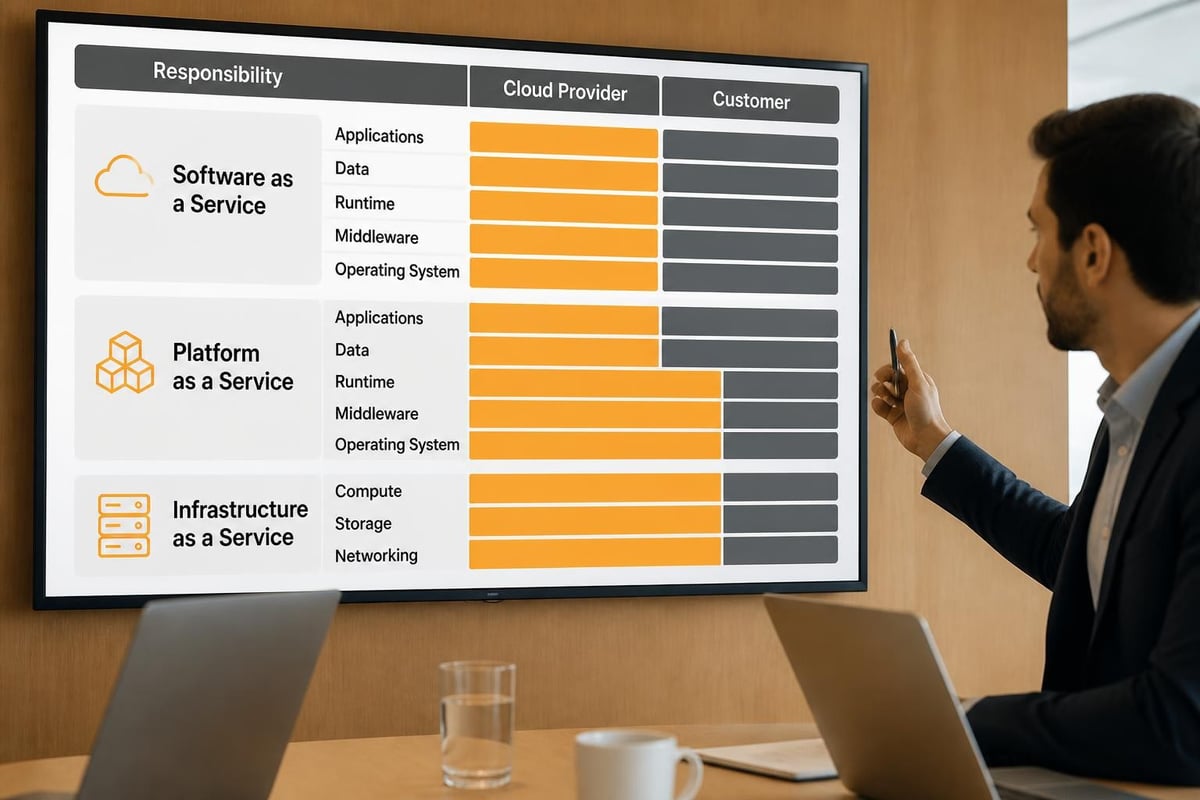
These characteristics translate into tangible business benefits when properly implemented. Nevertheless, achieving these benefits requires careful attention to architecture decisions at multiple layers of the technology stack. Infrastructure as a Service (IaaS) provides the foundation, offering virtualised computing resources that can scale dynamically. Platform as a Service (PaaS) builds upon this foundation by adding development frameworks and middleware. Finally, Software as a Service (SaaS) delivers complete applications without requiring organisations to manage underlying infrastructure.
Service Model Selection Criteria
| Service Model | Control Level | Management Responsibility | Best Use Cases |
|---|---|---|---|
| IaaS | High | Customer manages OS, middleware, applications | Custom applications, legacy migration, DevOps environments |
| PaaS | Medium | Provider manages infrastructure and platform | Application development, API services, database hosting |
| SaaS | Low | Provider manages everything except data and access | Email, collaboration, CRM, productivity tools |
Moreover, the choice between these models significantly impacts operational overhead, security responsibilities, and total cost of ownership. Organisations must evaluate their technical capabilities, compliance requirements, and business objectives when selecting the appropriate service model for each workload.
Deployment Models and Strategic Considerations
Solutions cloud computing manifests in four primary deployment models, each offering distinct advantages and addressing specific business requirements. Public cloud solutions provide maximum scalability and cost efficiency through shared infrastructure. In addition, private cloud deployments offer enhanced control and security by dedicating resources to a single organisation. Hybrid cloud architectures combine both approaches, whilst community clouds serve specific industry sectors with shared compliance needs.
The decision between these models profoundly affects security posture, regulatory compliance, and operational flexibility. Therefore, European organisations must carefully consider data sovereignty requirements, particularly in light of GDPR and the extraterritorial reach of regulations such as the US CLOUD Act. Hosting data within European data centres under European jurisdiction provides legal certainty that transcends technical security measures.
Hybrid Cloud Architecture Benefits
- Workload flexibility: Deploy sensitive data on-premises whilst leveraging public cloud for development and testing
- Cost optimisation: Balance capital expenditure on private infrastructure with operational expenditure on public cloud resources
- Regulatory compliance: Maintain jurisdiction over regulated data whilst accessing global cloud capabilities
- Business continuity: Implement redundancy across multiple environments and geographic locations
- Legacy integration: Connect existing systems with modern cloud-native applications seamlessly
Furthermore, Forrester's analysis of cloud trends for 2025 highlights the accelerating adoption of hybrid and multi-cloud strategies as organisations seek to avoid vendor lock-in whilst optimising for specific workload requirements. This trend underscores the importance of architectural planning that accommodates multiple deployment targets.
Security Frameworks for Cloud Solutions
Security remains the paramount concern when implementing solutions cloud computing, particularly for organisations handling sensitive business data or personal information. The Cloud Security Alliance's Cloud Controls Matrix provides a comprehensive framework for assessing and implementing security controls across 17 domains, from application security to supply chain management.
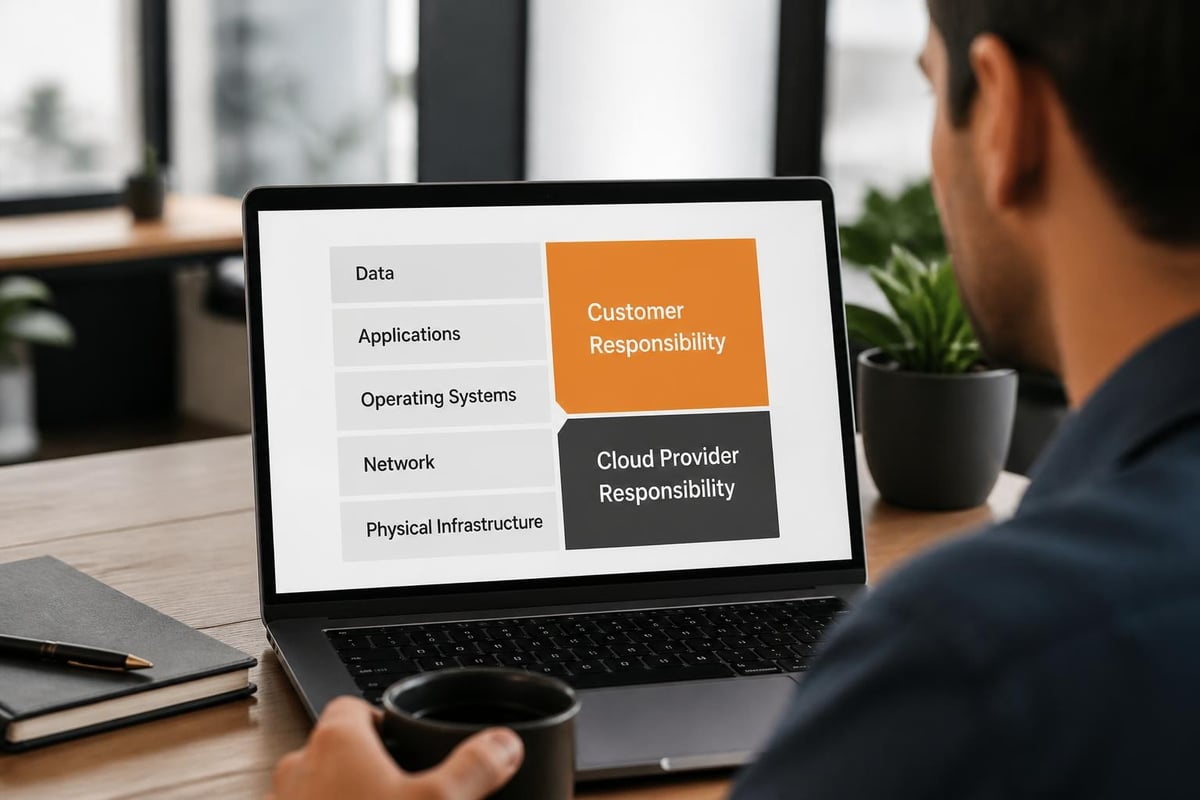
Nevertheless, security in cloud environments operates on a shared responsibility model. Cloud providers secure the infrastructure, whilst customers must protect their data, manage access controls, and configure services appropriately. This division of responsibility varies by service model, with IaaS requiring greater customer involvement than SaaS solutions.
| Security Domain | Provider Responsibility | Customer Responsibility |
|---|---|---|
| Physical security | Data centre access, environmental controls | None |
| Network security | Infrastructure protection, DDoS mitigation | Virtual network configuration, firewall rules |
| Data encryption | Encryption at rest infrastructure | Key management, encryption in transit, application-level encryption |
| Identity and access | Platform authentication mechanisms | User provisioning, role assignment, access policies |
| Application security | Platform vulnerabilities | Application code, dependency management, configuration |
Moreover, the Linux Foundation's Cloud Native Security Report reveals that organisations face persistent challenges in securing cloud-native workloads, particularly around supply chain security and container runtime protection. Therefore, implementing defence-in-depth strategies becomes essential.
Implementing Zero-Trust Architecture
The zero-trust security model has emerged as the gold standard for solutions cloud computing environments. This approach assumes no implicit trust based on network location, instead requiring verification for every access request. Furthermore, implementing zero-trust principles involves several key components.
Firstly, identity becomes the primary security perimeter rather than network boundaries. Multi-factor authentication, single sign-on, and conditional access policies ensure that only authorised users access specific resources. Secondly, microsegmentation limits lateral movement within cloud environments by restricting communication between workloads to explicitly defined paths. Finally, continuous monitoring and analytics detect anomalous behaviour that might indicate security incidents.
Cloud-Native Technologies and Solutions Architecture
The rise of cloud-native development has transformed how organisations architect solutions cloud computing environments. According to the CNCF's 2024 Annual Cloud Native Survey, Kubernetes adoption continues to grow, with organisations increasingly deploying containerised workloads across multiple cloud environments. In addition, service mesh technologies, serverless computing, and event-driven architectures enable new patterns for building resilient, scalable applications.
Container orchestration platforms provide the foundation for cloud-native solutions by automating deployment, scaling, and management of containerised applications. Nevertheless, successfully implementing these technologies requires significant changes to development practices, operational processes, and organisational culture. DevOps methodologies, continuous integration and deployment pipelines, and infrastructure as code become essential capabilities.
Key Cloud-Native Technology Categories
- Container platforms: Kubernetes, Docker, containerd for application packaging and orchestration
- Service mesh: Istio, Linkerd for microservices communication, observability, and security
- Observability tools: Prometheus, Grafana, OpenTelemetry for monitoring, logging, and tracing
- CI/CD pipelines: GitLab, Jenkins, ArgoCD for automated build, test, and deployment
- Infrastructure as code: Terraform, Pulumi, Ansible for declarative infrastructure management
Furthermore, the CNCF Technology Landscape Radar provides valuable guidance on technology maturity and adoption patterns across the cloud-native ecosystem. This resource helps organisations make informed decisions about which technologies to adopt and which remain experimental.
Architectural Patterns for Resilient Cloud Solutions
Designing resilient solutions cloud computing architectures requires applying proven patterns that address common challenges. The Microsoft Azure Well-Architected Framework defines five pillars that should guide architectural decisions: cost optimisation, operational excellence, performance efficiency, reliability, and security. Moreover, these principles apply regardless of the specific cloud platform chosen.
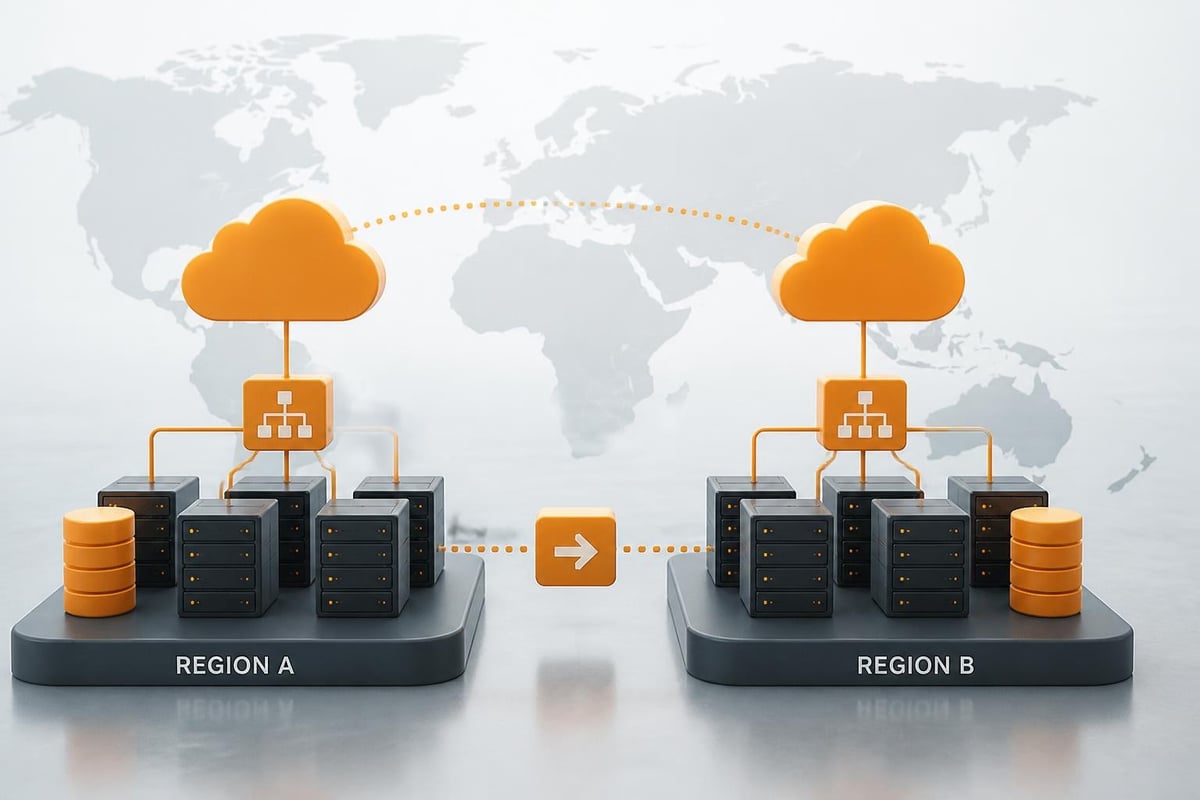
High availability architectures distribute workloads across multiple availability zones and regions to eliminate single points of failure. Additionally, disaster recovery strategies must account for both infrastructure failures and data corruption scenarios. Recovery time objectives (RTO) and recovery point objectives (RPO) determine the appropriate level of redundancy and backup frequency.
Design Patterns for Cloud Resilience
- Circuit breaker pattern: Prevent cascading failures by detecting and isolating failing services
- Retry with exponential backoff: Handle transient failures gracefully without overwhelming services
- Bulkhead pattern: Isolate resources to prevent failure in one component affecting others
- Health check endpoints: Enable automated monitoring and traffic routing decisions
- Immutable infrastructure: Replace rather than update components to ensure consistency and enable rollback
In addition, Microsoft's Azure Architecture Center provides detailed reference architectures and implementation guidance for common scenarios. These battle-tested patterns accelerate solution development whilst reducing architectural risks.
Financial Management and Cost Optimisation
Solutions cloud computing fundamentally changes the economics of IT infrastructure, replacing capital expenditure on hardware with operational expenditure on consumed resources. Nevertheless, this shift introduces new challenges around cost visibility, allocation, and optimisation. The FinOps Foundation's 2024 Framework establishes best practices for cloud financial management across three phases: inform, optimise, and operate.
Cost allocation becomes critical in multi-tenant environments where multiple teams or business units share cloud resources. Tagging strategies enable accurate attribution of costs to specific projects, departments, or customers. Furthermore, showback and chargeback mechanisms create accountability by making consumption visible and allocating costs appropriately.
| Optimisation Strategy | Implementation Approach | Potential Savings |
|---|---|---|
| Right-sizing | Match instance types to actual workload requirements | 20-40% |
| Reserved capacity | Commit to long-term usage for predictable workloads | 30-70% |
| Spot instances | Use interruptible compute for fault-tolerant workloads | 60-90% |
| Auto-scaling | Automatically adjust capacity based on demand | 15-35% |
| Storage tiering | Move infrequently accessed data to cheaper storage classes | 40-80% |
Moreover, continuous optimisation requires ongoing analysis of usage patterns, performance metrics, and business requirements. Automated tools can identify underutilised resources, recommend appropriate instance types, and enforce governance policies that prevent wasteful spending.
Data Sovereignty and Regulatory Compliance
For European organisations implementing solutions cloud computing, data sovereignty represents both a legal requirement and a competitive differentiator. GDPR mandates that personal data transfers outside the European Economic Area receive adequate protection. Therefore, hosting data within European data centres under European legal jurisdiction provides the strongest compliance foundation.
The extraterritorial reach of foreign legislation, particularly the US CLOUD Act, creates potential conflicts when using cloud providers subject to US jurisdiction. Furthermore, Schrems II and subsequent rulings have invalidated previous frameworks for lawful data transfers, increasing scrutiny on international cloud arrangements. European cloud providers operating exclusively under European law offer a compliant alternative that avoids these jurisdictional conflicts.
Compliance Considerations for Cloud Solutions
- Data location: Ensure data resides in jurisdictions with adequate legal protections
- Provider jurisdiction: Evaluate the legal framework governing the cloud provider entity
- Encryption and key management: Maintain control over encryption keys independently of the provider
- Audit and certification: Verify ISO 27001, SOC 2, and other relevant certifications
- Data processing agreements: Establish clear contractual terms that reflect GDPR requirements
Additionally, sector-specific regulations such as NIS2 for critical infrastructure or DORA for financial services impose additional requirements on cloud solutions. Therefore, organisations must map their regulatory obligations and select cloud providers that can demonstrate appropriate compliance capabilities.
Integration Strategies for Cloud Solutions
Successful solutions cloud computing implementations rarely exist in isolation. Instead, they must integrate with existing on-premises systems, partner platforms, and third-party services. API-first architecture enables this connectivity by exposing well-defined interfaces for data exchange and service consumption. Moreover, event-driven integration patterns support real-time data synchronisation and workflow automation across heterogeneous environments.
Enterprise service bus (ESB) and integration platform as a service (iPaaS) solutions provide middleware capabilities that abstract integration complexity. These platforms handle protocol translation, data transformation, and routing logic that would otherwise require custom development. Furthermore, they enable non-technical users to design integration workflows through visual interfaces.
For businesses seeking to consolidate their cloud infrastructure whilst maintaining compliance and control, platforms like vBoxxCloud offer GDPR-compliant storage with integrated collaboration features, eliminating the complexity of managing multiple disparate services. The platform's European hosting ensures data sovereignty whilst providing the functionality businesses expect from modern cloud solutions.
API Management Best Practices
- Versioning: Maintain backwards compatibility whilst enabling evolution of API contracts
- Rate limiting: Protect backend services from overload and abuse
- Authentication and authorisation: Implement OAuth 2.0, API keys, or certificate-based security
- Documentation: Provide comprehensive, up-to-date API specifications using OpenAPI standards
- Monitoring and analytics: Track usage patterns, performance metrics, and error rates
In addition, microservices architectures benefit from service mesh technologies that provide observability, traffic management, and security capabilities at the infrastructure layer rather than requiring application-level implementation.
Migration Strategies and Execution
Transitioning to solutions cloud computing requires methodical planning and execution to minimise disruption whilst maximising benefits. The six Rs of cloud migration provide a framework for evaluating workload migration strategies: rehost (lift and shift), replatform (lift, tinker, and shift), repurchase (drop and shop), refactor (re-architect), retain (keep on-premises), and retire (decommission).
Assessment and discovery phases inventory existing applications, dependencies, and data flows. Furthermore, this analysis identifies technical debt, licensing constraints, and business-critical systems that require special handling. Migration waves group related applications to manage complexity and interdependencies systematically.
- Portfolio assessment: Catalogue applications and evaluate migration suitability
- Business case development: Quantify costs, benefits, and risks for executive approval
- Landing zone preparation: Establish network connectivity, identity integration, and governance frameworks
- Pilot migration: Validate approach with low-risk workloads before full-scale execution
- Wave migration: Execute systematic migration in prioritised groupings
- Optimisation: Refactor applications to leverage cloud-native capabilities post-migration
Moreover, establishing cloud centres of excellence (CCoE) helps organisations develop the skills, processes, and governance structures necessary for successful cloud adoption. These teams establish standards, provide guidance, and accelerate delivery across the organisation.
Operational Excellence in Cloud Environments
Operating solutions cloud computing environments effectively requires new approaches to monitoring, incident management, and continuous improvement. Site reliability engineering (SRE) practices balance the velocity of feature delivery with the stability of production systems through error budgets, service level objectives, and blameless post-mortems. Additionally, automated remediation reduces mean time to recovery by responding to common failure scenarios without human intervention.
Observability goes beyond traditional monitoring by providing insights into system behaviour through logs, metrics, and distributed traces. Furthermore, this telemetry data enables teams to understand complex system interactions and diagnose issues in distributed architectures. Centralised logging platforms aggregate data from multiple sources, whilst alerting systems notify teams of threshold violations or anomalous patterns.
Operational Maturity Model
| Maturity Level | Characteristics | Key Capabilities |
|---|---|---|
| Basic | Manual processes, reactive | Basic monitoring, manual deployment |
| Managed | Documented processes, some automation | CI/CD pipelines, infrastructure as code |
| Defined | Standardised processes, extensive automation | Auto-scaling, self-healing, centralised logging |
| Quantitatively managed | Metrics-driven, predictive | SLO/SLI frameworks, capacity planning, cost optimisation |
| Optimising | Continuous improvement, proactive | Chaos engineering, automated remediation, ML-driven operations |
Therefore, organisations should assess their current operational maturity and establish roadmaps for progressive capability development. This evolution typically occurs over quarters or years rather than weeks or months.
Solutions cloud computing represents far more than technological modernisation. It fundamentally transforms how organisations deliver value whilst navigating complex regulatory requirements. European businesses particularly benefit from cloud providers that combine technical excellence with strong data sovereignty and privacy commitments. vBoxx delivers precisely this combination through its comprehensive suite of cloud services, hosted entirely within ISO 27001-certified Dutch data centres and free from US CLOUD Act jurisdiction. Whether you need secure storage, communication platforms, or specialised infrastructure, vBoxx provides the compliance-first foundation your business requires.