

Selecting the right cloud provider has become one of the most critical infrastructure decisions businesses face in 2026. As a result, with global cloud spending projected to surpass $500 billion this year, organisations are increasingly dependent on cloud services for their digital operations. However, the decision extends far beyond simple storage or computing power. In fact, it encompasses data sovereignty, security compliance, sustainability practices, and the ability to scale alongside evolving business needs. Therefore, understanding what distinguishes exceptional cloud providers from merely adequate ones can determine whether your infrastructure becomes a competitive advantage or a vulnerability.
Understanding Cloud Provider Models and Service Offerings
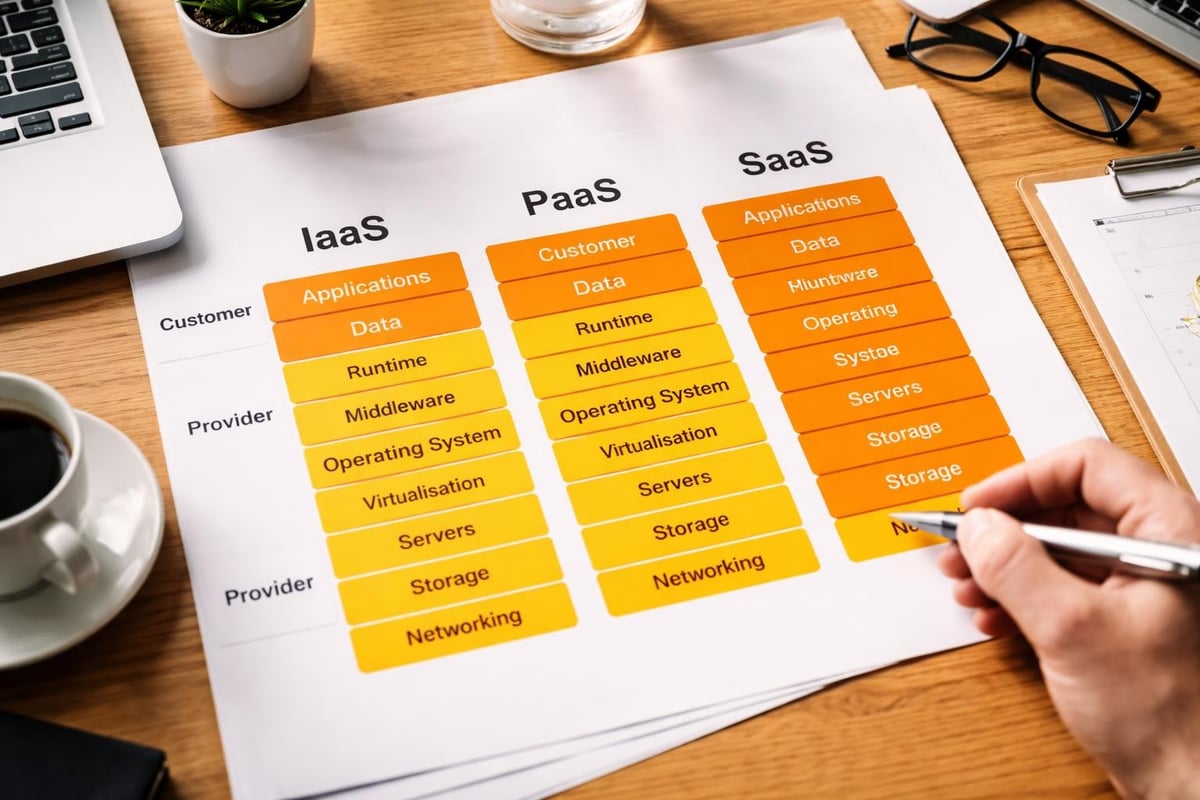
A cloud provider delivers computing resources over the internet, ranging from basic storage to complex infrastructure solutions. In particular, the three primary service models define how these resources are packaged and delivered to customers.
First, Infrastructure as a Service (IaaS) provides virtualised computing resources, including servers, storage, and networking. As a result, businesses gain maximum control over their infrastructure while eliminating physical hardware management. Therefore, this model suits organisations requiring customised environments or running legacy applications.
Next, Platform as a Service (PaaS) offers development frameworks and tools, thereby enabling teams to build applications without managing underlying infrastructure. Consequently, developers can focus on coding while the provider handles servers, storage, databases, and middleware.
Finally, Software as a Service (SaaS) delivers complete applications over the internet. In this case, users access software through web browsers, while the provider manages everything from infrastructure to application maintenance.
Service Depth and Specialisation
Not all cloud providers offer identical capabilities within these models. Some specialise in specific industries or use cases, whilst others attempt comprehensive coverage.
Consider these differentiating factors:
- Security certifications and compliance frameworks (ISO 27001, SOC 2, GDPR)
- Geographic data centre distribution for latency and regulatory compliance
- Backup and disaster recovery capabilities with defined recovery objectives
- Green hosting practices and sustainability commitments
- Consultancy and migration support for seamless transitions
Security Considerations When Evaluating Cloud Providers
Security represents the paramount concern when selecting a cloud provider. Understanding cloud security best practices helps organisations establish baseline expectations.
The shared responsibility model defines boundaries between provider and customer security obligations. Providers secure the infrastructure, whilst customers protect their data, applications, and access controls.
| Security Layer | Provider Responsibility | Customer Responsibility |
|---|---|---|
| Physical Infrastructure | Data centre security, hardware | None |
| Network | Network infrastructure, DDoS protection | Firewall configuration, network access controls |
| Storage | Disk encryption at rest | Data classification, encryption key management |
| Applications | Platform security patches | Application security, code vulnerabilities |
| Access | Account security features | User authentication, password policies |
Critical Security Features
When evaluating providers, verify these essential security capabilities:
- Encryption standards for data at rest and in transit
- Multi-factor authentication and identity management
- Security monitoring and logging with real-time alerts
- Compliance certifications relevant to your industry
- Vulnerability management and patch deployment processes
- Incident response protocols and support availability
Recent vulnerabilities have demonstrated that even major cloud providers face security risks. Organisations must implement defence-in-depth strategies rather than relying solely on provider security measures.
Privacy-focused providers emphasise data sovereignty, ensuring customer data remains within specified jurisdictions. This becomes particularly critical for European businesses navigating GDPR requirements and Europe’s digital sovereignty initiatives.
Performance Metrics and Infrastructure Quality
Performance determines whether cloud infrastructure supports or hinders business operations. In particular, several measurable factors indicate provider capabilities.
First, uptime guarantees typically promise 99.9% availability or higher. However, actual performance matters more than contractual promises. Therefore, research provider track records and incident histories before committing.
Additionally, latency and network performance depend on data centre proximity and network architecture. As a result, providers with geographically distributed infrastructure deliver superior performance for globally distributed teams.
Furthermore, scalability mechanisms enable resources to expand during demand spikes and contract during quiet periods. In this context, evaluate both vertical scaling (increasing individual resource capacity) and horizontal scaling (adding more resources) to ensure optimal flexibility and efficiency.
Monitoring and Transparency
Reputable cloud providers offer comprehensive monitoring tools:
- Real-time performance dashboards
- Resource utilisation metrics
- Network traffic analysis
- Storage capacity tracking
- Historical performance data
Transparency regarding infrastructure changes, maintenance windows, and incident communications indicates provider maturity. Recent changes in cloud service practices by major providers highlight the importance of clear communication channels.
Cost Structure and Value Assessment
Cloud provider pricing models vary significantly, making direct comparisons challenging. Understanding cost structures prevents unexpected expenses.
Pay-as-you-go pricing charges for actual resource consumption. This model suits variable workloads but requires careful monitoring to prevent cost overruns.
Reserved capacity pricing offers discounts for committing to specific resources over extended periods. Organisations with predictable workloads benefit from substantial savings.
Tiered pricing provides different service levels at varying price points. Evaluate whether premium tiers deliver meaningful value for your requirements.
Hidden Costs and Value Factors
Beyond headline pricing, consider these cost factors:
- Data transfer fees for bandwidth between services or external networks
- Backup and snapshot storage often priced separately from primary storage
- Support tiers determining response times and access to technical expertise
- Migration costs including data transfer and configuration assistance
- Training requirements for staff to manage new platforms effectively
Value extends beyond raw pricing. A slightly more expensive cloud provider offering superior security, dedicated support, and green hosting practices may deliver better long-term value than the cheapest option.

Compliance, Data Sovereignty, and Regulatory Requirements
Regulatory compliance shapes cloud provider selection for many industries. Financial services, healthcare, and government organisations face stringent data handling requirements.
Data sovereignty concerns where data physically resides and which jurisdictions govern it. European businesses increasingly prioritise providers with European data centres to ensure GDPR compliance and avoid complications with international data transfers.
Industry-Specific Certifications
Different sectors require specific compliance frameworks:
| Industry | Key Certifications | Primary Concerns |
|---|---|---|
| Healthcare | HIPAA, HITECH | Patient data protection, audit trails |
| Finance | PCI DSS, FCA requirements | Transaction security, data retention |
| Government | ISO 27001, Government-specific frameworks | National security, data classification |
| General Business | GDPR, SOC 2, ISO 27001 | Customer data protection, privacy rights |
Verify that your cloud provider maintains current certifications and undergoes regular third-party audits. Compliance isn’t static; providers must continuously adapt to evolving regulations.
Contractual guarantees should specify data handling practices, breach notification procedures, and audit rights. Review service level agreements carefully, particularly regarding data ownership, portability, and deletion.
Migration Support and Long-Term Partnership Considerations
Switching cloud providers involves significant effort and risk. Initial provider selection should consider the entire relationship lifecycle.
Migration services differentiate providers genuinely invested in customer success from those focused solely on acquisition. Comprehensive migration support includes:
- Assessment and planning to identify dependencies and migration paths
- Data transfer assistance with minimal downtime
- Configuration support for recreating environments
- Testing and validation ensuring functionality post-migration
- Training and documentation enabling teams to manage new systems
For businesses seeking hands-on guidance through cloud adoption, exploring options like a demonstration of all-in-one solutions can clarify how different services integrate into cohesive infrastructure.
Vendor Lock-In and Exit Strategies
Cloud provider lock-in occurs when proprietary technologies or configurations make migration prohibitively expensive. Evaluate providers on these factors:
- Standard technologies versus proprietary solutions
- Data export capabilities and formats
- API compatibility with industry standards
- Containerisation support for portable workloads
Even when satisfied with a provider, maintain exit strategies. Document configurations, regularly export data, and avoid unnecessary dependencies on proprietary features.

Sustainability and Green Hosting Practices
Environmental impact increasingly influences infrastructure decisions. In particular, cloud computing can reduce overall carbon footprints through resource efficiency, however, provider practices vary dramatically.
For example, renewable energy commitments indicate environmental responsibility. Specifically, leading providers power data centres with solar, wind, and hydroelectric sources, thereby targeting carbon neutrality or even carbon negativity.
Additionally, energy efficiency metrics like Power Usage Effectiveness (PUE) measure how much energy supports computing versus cooling and overhead. As a result, industry-leading data centres achieve PUE ratings below 1.2, meaning that only around 20% of energy goes to non-computing purposes.
Furthermore, hardware lifecycle management encompasses responsible equipment disposal, component recycling, and extended hardware utilisation. Consequently, providers committed to sustainability maximise equipment lifespan while also ensuring proper recycling of retired infrastructure.
Transparency and Reporting
Genuine sustainability commitments include regular environmental reporting. Look for providers publishing:
- Annual carbon emission reports
- Energy source breakdowns
- Water usage statistics
- Recycling and waste reduction metrics
Green hosting practices align with corporate sustainability goals whilst often correlating with operational efficiency and cost optimisation.
Multi-Cloud and Hybrid Strategies
Modern cloud strategies increasingly embrace multi-cloud approaches, leveraging multiple providers for different workloads or redundancy.
Multi-cloud benefits include avoiding vendor lock-in, optimising costs by selecting best-value providers for specific services, and improving resilience through provider diversity.
Hybrid cloud architectures combine on-premises infrastructure with cloud resources, enabling gradual migration, regulatory compliance, and workload optimisation based on sensitivity and performance requirements.
However, complexity increases with multiple providers. Organisations must manage different interfaces, security models, and billing systems whilst ensuring interoperability.
Integration and Management Tools
Successful multi-cloud strategies require:
- Unified management platforms for visibility across providers
- Consistent security policies and access controls
- Automated workload orchestration and failover
- Consolidated monitoring and alerting
- Integrated backup and disaster recovery
Evaluate cloud providers on their openness to multi-cloud environments and compatibility with orchestration tools.
Support, Documentation, and Community Resources
Technical support quality directly impacts operational efficiency and problem resolution speed. Cloud provider support varies from basic documentation to dedicated account management.
Support tiers typically include:
- Community support through forums and user communities
- Email support with defined response times
- Priority support with faster response and dedicated channels
- Managed services with proactive monitoring and optimisation
Beyond formal support, comprehensive documentation, tutorials, and knowledge bases enable self-service problem resolution. Active user communities provide peer assistance and share solutions to common challenges.
Professional Services and Expertise
Cloud providers offering consultancy services bring valuable expertise to infrastructure planning, optimisation, and troubleshooting. Secure cloud services often include access to specialists who understand both technical implementation and business requirements.
Training resources help teams maximise platform capabilities. Look for providers offering certification programmes, webinars, and detailed technical documentation.
Making Your Cloud Provider Decision
Selecting a cloud provider requires balancing multiple priorities across security, performance, cost, compliance, and sustainability. No single provider excels in every dimension, making the decision inherently about trade-offs aligned with organisational priorities.
Start by defining critical requirements:
- Security and compliance non-negotiables based on industry and regulatory obligations
- Performance thresholds for latency, uptime, and scalability
- Budget parameters including initial costs and ongoing operational expenses
- Geographic requirements for data sovereignty and local presence
- Support expectations matching internal technical capabilities
Proof of concept testing validates provider capabilities before full commitment. Most providers offer trial periods or limited free tiers enabling hands-on evaluation.
Reference customers in similar industries provide insights into real-world experiences. Request case studies and, where possible, speak directly with existing customers about their experiences.
The cloud provider landscape continues evolving rapidly, with new capabilities, pricing models, and competitive dynamics emerging regularly. Regular reassessment ensures your infrastructure partner continues meeting business needs as both organisations evolve.
Choosing the right cloud provider fundamentally shapes your digital infrastructure’s security, performance, and sustainability for years ahead. By carefully evaluating security measures, compliance capabilities, performance metrics, and long-term partnership potential, organisations position themselves for success in an increasingly cloud-dependent business environment. vBoxx delivers secure hosting and cloud solutions with emphasis on privacy, security, and green hosting practices, providing businesses with reliable, sustainable infrastructure backed by expert consultancy and migration support. Whether you’re transitioning to the cloud for the first time or optimising existing infrastructure, partnering with a provider committed to your long-term success makes all the difference.