Cloud environments are evolving at an unprecedented pace in 2026, bringing both opportunity and complexity for organisations of all sizes. As a result, as businesses race to innovate, the risks grow—93% of organisations now report encountering at least one critical cloud risk every day, according to Wiz (2023).
In particular, the need for robust, managed cloud security has never been more urgent. Modern threats are relentless, and internal teams can quickly become overwhelmed. Therefore, managed cloud security empowers businesses to scale confidently, stay compliant, and focus on growth without sacrificing protection.
In this guide, you will discover practical insights, proven strategies, and up-to-date best practices for evaluating and implementing managed cloud security. Specifically, we will cover its core functions, benefits, service models, and how to select the right provider for your needs.
Understanding Managed Cloud Security in 2026
The cloud landscape in 2026 is more dynamic and complex than ever before. As a result, as organisations accelerate digital transformation, the need for managed cloud security becomes critical. In particular, businesses must protect vast, distributed environments without slowing innovation or overburdening internal teams.

Defining Managed Cloud Security
Managed cloud security refers to outsourcing essential cloud security operations to expert third-party providers. In particular, these services go far beyond traditional monitoring, offering 24/7 oversight, automated response, and deep integration with cloud-native security tools.
Furthermore, providers use advanced platforms for continuous threat detection, incident response, and compliance management. As a result, the need for managed cloud security is growing rapidly, as more businesses adopt multi-cloud strategies yet struggle with limited in-house expertise. Consequently, this gap is driving organisations to seek specialised, always-on protection.
In addition, modern managed cloud security solutions now integrate with CNAPP (Cloud-Native Application Protection Platform), CSPM (Cloud Security Posture Management), and ASPM (Application Security Posture Management). As a result, these integrations enable unified visibility and risk management across every layer, from code to production.
For example, a key driver behind the shift to managed cloud security is the rising frequency of critical cloud risks. According to Wiz’s 2023 Cloud Threat Landscape, 93% of organisations encounter at least one serious cloud risk every day. In particular, this level of exposure highlights the limitations of legacy, on-premise security tools, which often lack the context and automation needed in cloud environments.
Ultimately, the industry is seeing a clear move from manual, reactive approaches to proactive, context-driven, and automated cloud-native security. Moreover, one of the main benefits is addressing misconfigurations, which Gartner predicts will remain the leading cause of cloud breaches through 2025. As a result, managed cloud security providers help organisations reduce these risks through automated checks, policy enforcement, and continuous improvement.
The Evolving Cloud Threat Landscape
The threat landscape for managed cloud security is constantly evolving as businesses adopt more complex cloud architectures. Multi-cloud and hybrid deployments create new challenges in visibility and control, making it essential to have robust security strategies in place.
Threats range from data breaches and account hijacking to insecure APIs, denial-of-service attacks, and malicious insiders. The shared responsibility model in the cloud means that while providers secure the infrastructure, customers remain accountable for securing their data, configurations, and access controls. This division of duties can lead to gaps if not clearly understood and managed.
Recent studies indicate that nearly all cloud breaches through 2025 will be the result of customer misconfigurations, rather than provider failures. To counter these risks, organisations must implement layered security measures, including strong protocols (SSL/TLS), granular access controls, intrusion detection systems, and data loss prevention tools.
Scalability and elasticity are unique to cloud environments, requiring security solutions that adapt in real time as workloads expand or contract. The case of Blackstone, which consolidated its core cloud security functions via managed services, demonstrates the value of this approach for large, complex environments.
For a deeper look at practical examples and lessons learned from real organisations, explore these Cloud Security Case Studies, which showcase how managed cloud security is being adopted to address emerging challenges.
Core Functions and Features of Managed Cloud Security Providers
Modern businesses in 2026 require managed cloud security solutions that go far beyond basic monitoring. These providers deliver a comprehensive suite of services, ensuring threats are detected, vulnerabilities are managed, compliance is maintained, and security is woven into every layer of the cloud environment.
24/7 Threat Detection and Response
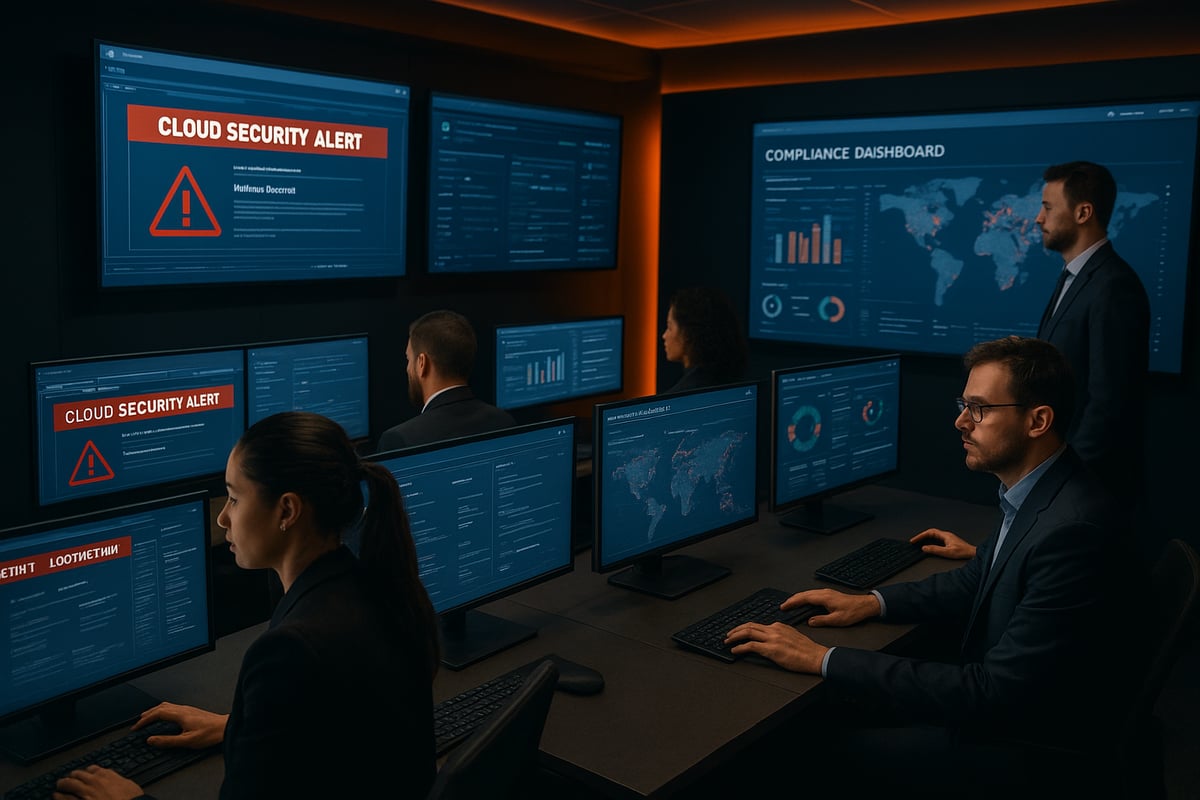
A core function of managed cloud security providers is continuous, around-the-clock threat monitoring. In particular, to achieve this, security teams leverage advanced SIEM and XDR platforms to monitor cloud workloads, network traffic, user activities, and APIs in real time.
Furthermore, providers use automated SOAR systems to respond instantly to threats. For example, when an anomaly is detected, compromised resources are immediately isolated, credentials are revoked, and alerts are triggered within minutes. In addition, this rapid response is strengthened by threat intelligence feeds such as MITRE ATT&CK, which help identify both known and emerging attack patterns.
Moreover, service level agreements (SLAs) often guarantee incident triage within minutes, ensuring swift action when issues arise. Beyond that, retrospective analysis is also conducted to uncover stealthy attacks that may have bypassed early detection. As a result, businesses benefit from continuous, adaptive protection through managed cloud security, even as threats continue to evolve.
Vulnerability and Patch Management
The managed cloud security approach includes proactive vulnerability management across infrastructure, containers, and application code. In particular, to support this, providers conduct continuous scans, identifying misconfigurations and vulnerabilities early, before they can be exploited.
Furthermore, contextual risk assessment plays a crucial role. Security teams evaluate factors such as exploitability, exposure paths, and the potential blast radius of vulnerabilities. In addition, integration with CNAPP and ASPM platforms consolidates risk insights from development through to production, ensuring a complete security view across the entire lifecycle.
Moreover, automated patching significantly reduces manual workload and helps ensure timely remediation of critical issues. As a result, by streamlining vulnerability management in this way, managed cloud security providers enable organisations to stay ahead of attackers and minimise the risk of breaches caused by unpatched systems.
Compliance and Regulatory Management
Managed cloud security providers simplify compliance with complex regulations like GDPR, PCI DSS, HIPAA, and NIS2. Automated tools map cloud configurations to compliance controls, continuously auditing infrastructure for policy drift and generating real-time evidence for audits.
CSPM platforms flag non-compliance, helping teams address issues before regulatory deadlines. This is particularly valuable in regulated industries where penalties for non-compliance can be severe.
| Compliance Feature | Benefit |
|---|---|
| Automated Mapping | Reduces manual compliance effort |
| Continuous Auditing | Ensures ongoing regulatory alignment |
| Audit Evidence Generation | Eases preparation for external reviews |
Through robust compliance management, managed cloud security enables businesses to confidently meet regulatory requirements without overwhelming internal teams.
Security Architecture Hardening and Design
Beyond detection and compliance, managed cloud security providers play a vital role in shaping the security architecture of cloud environments. In particular, they offer guidance on identity policies, workload segmentation, network isolation, and data encryption.
Furthermore, security is embedded early through Infrastructure-as-Code (IaC) scanning and shift-left practices. As a result, providers work with development teams to implement preventative measures, reducing the attack surface and limiting the impact of potential vulnerabilities.
Ultimately, integrating security in the development lifecycle ensures that controls are not an afterthought. Consequently, with managed cloud security, organisations benefit from a proactive rather than reactive security posture.
Toolchain Integration and Platform Coverage
Effective managed cloud security solutions integrate seamlessly with a wide variety of cloud-native tools and development workflows. Providers ensure compatibility with CNAPP, CSPM, ASPM, and code security platforms, allowing for unified risk management across AWS, Azure, GCP, and hybrid environments.
Direct integration with CI/CD pipelines and version control systems supports code-to-cloud visibility. This enables synchronised remediation, reducing response times and preventing workflow disruption.
For further insights into best practices and the latest challenges in this domain, readers can explore Cloud Security Articles and Guides.
With managed cloud security, organisations achieve comprehensive coverage, streamlined operations, and future-ready protection for their cloud assets.
Managed Cloud Security Service Models: Fully Managed vs. Co-Managed
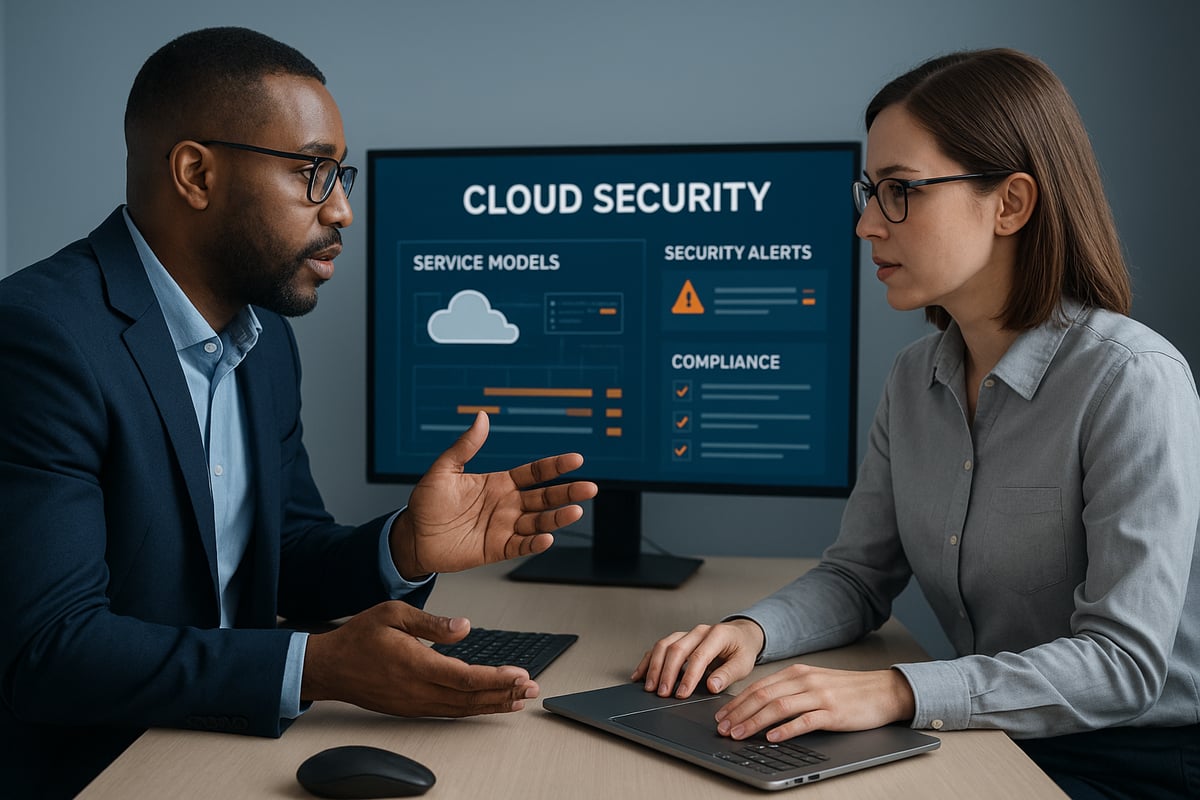
As organisations face mounting pressures to protect their cloud assets, understanding the available managed cloud security service models is essential for making informed decisions. The two dominant approaches, fully managed and co-managed, offer distinct advantages and trade-offs. Selecting the right model can shape your security posture, resource allocation, and long-term cloud strategy.
Fully Managed Security Model
The fully managed cloud security model entrusts all aspects of cloud protection to a specialised third-party provider. This approach is particularly attractive for startups, small and medium-sized businesses, and fast-growing organisations without extensive internal security expertise.
With fully managed cloud security, providers deliver end-to-end coverage, including threat detection, incident response, compliance management, and continuous monitoring. Deployment is rapid, requiring minimal involvement from in-house teams, allowing businesses to focus on growth and innovation.
A key advantage is scalability. As your business expands, the managed cloud security provider adapts controls and resources accordingly. However, handing over daily operations may reduce visibility and customisation options, and there is potential for vendor lock-in if integrations are not flexible.
For instance, many SaaS companies leverage fully managed cloud security to maintain consistent controls and meet industry requirements as they scale. This model ensures that even with limited internal capacity, organisations benefit from best-in-class security practices and proactive defence.
Co-Managed Security Model
The co-managed cloud security model is built on collaboration between your internal security team and an external provider. This arrangement is ideal for large enterprises, regulated industries, and organisations with mature security operations that require both external expertise and internal control.
Co-managed cloud security empowers organisations to maintain greater visibility and customisation over their cloud environment. Providers supplement in-house capabilities with advanced monitoring, threat intelligence, and compliance support, while internal teams retain influence over policies and workflows.
This model does require dedicated internal resources and ongoing coordination, but it offers flexibility to align security measures with business objectives. For example, insurance companies and legal firms often use co-managed SIEM and cloud migration support to address evolving regulatory and operational needs.
By combining the strengths of cloud security providers with internal knowledge, businesses can achieve a tailored, robust defence that meets complex compliance demands without sacrificing agility or oversight.
Choosing the Right Engagement Model
Selecting between fully managed and co-managed cloud security models depends on several critical factors, including organisation size, security maturity, regulatory requirements, and the desired level of control. To help visualise the differences, consider the following table:
| Factor | Fully Managed | Co-Managed |
|---|---|---|
| Speed | Rapid deployment | Moderate, needs alignment |
| Overhead | Minimal internal input | Shared responsibilities |
| Visibility | Lower, provider-driven | High, collaborative |
| Customisation | Limited | Extensive |
| Scalability | High | High, with coordination |
For multinational organisations, regional compliance needs such as GDPR, CCPA, or PDPA are paramount. Engaging a provider experienced in these frameworks is essential, and practical advice can be found in resources like NIS2 Compliance Guides and Tips.
Ultimately, the right managed cloud security model will align with your business’s current capabilities and future ambitions, ensuring resilient protection and regulatory readiness as cloud environments evolve.
Evaluating and Selecting a Managed Cloud Security Provider
Selecting the right managed cloud security provider is a critical step in safeguarding your digital assets and ensuring business continuity. With the expanding threat landscape and increasing compliance demands, organisations must take a structured approach to evaluation. Each decision point should align with your technical requirements, regulatory obligations, and long-term business goals.

Visibility and Transparency
Comprehensive visibility is the cornerstone of effective managed cloud security. Providers should deliver full-stack insight into assets, configurations, vulnerabilities, and identity exposures across all cloud environments.
Opt for agentless or API-based platforms to reduce friction and allow seamless asset discovery. Transparent reporting and clear detection logic are essential, enabling your teams to understand and trust the provider’s remediation process.
Avoid black-box solutions. Instead, prioritise open communication and regular reporting. The importance of robust visibility is underlined by recent findings, with cloud security breach statistics for 2025 revealing that most incidents result from overlooked misconfigurations and lack of oversight.
Multi-Cloud and Environment-Specific Coverage
Modern cloud strategies often span AWS, Azure, GCP, Kubernetes, and hybrid environments. The managed cloud security provider you choose must offer consistent coverage and policy enforcement across this fragmented landscape.
Look for solutions that are platform-agnostic, ensuring uniform security controls and detection logic regardless of the underlying cloud service. This approach reduces gaps and simplifies risk management, especially for multinational organisations operating in multiple regions.
Effective managed cloud security services should support containers, serverless architectures, and on-premises integrations, enabling centralised visibility and unified response.
Integration with Existing Workflows
Seamless integration with your engineering and DevOps processes is vital. Managed cloud security should enhance, not disrupt, daily operations. Evaluate whether providers can embed security into CI/CD pipelines, ticketing systems, Infrastructure as Code (IaC) tools, and existing SIEM platforms.
This alignment accelerates remediation, reduces manual effort, and encourages a culture of shared security responsibility. Direct integration with developer workflows ensures that security is present from code commit through to production, supporting rapid innovation without compromising protection.
Scalability and Shift-Left Capabilities
As organisations scale, so do their security needs. Managed cloud security providers must deliver scalable solutions that adapt to growth and evolving architectures. Support for shift-left practices, such as IaC scanning and container image analysis, is now essential.
Providers should offer code-to-cloud traceability, enabling early detection of misconfigurations and vulnerabilities in the development lifecycle. This proactive stance helps prevent issues before they reach production, reducing risk and supporting agile delivery.
When evaluating providers, assess their ability to support microservices, rapid scaling, and future cloud adoption strategies.
Support and Service Level Agreements (SLAs)
Clear, robust SLAs are a non-negotiable aspect of managed cloud security. Providers should define incident response times, escalation procedures, and ongoing support commitments in detail.
Look for evidence of expert guidance, training, and access to a responsive security team. Leading providers guarantee incident triage within minutes and offer proactive risk mitigation advice. This level of support is especially critical for organisations with strict regulatory requirements or limited internal resources.
By prioritising these criteria, businesses can confidently select a cloud security partner that aligns with their risk tolerance, compliance mandates, and innovation goals.
Integration Strategies and Best Practices for Future-Ready Cloud Security
As organisations embrace the cloud, future-ready protection relies on a blend of cloud security strategies and best practices. The rapid pace of change means that security approaches must be layered, automated, and deeply integrated with business and development processes. Let us explore how to build a robust, scalable security foundation for 2026 and beyond.
Building a Layered Security Approach
A layered security approach is essential to defending against the evolving threat landscape. Managed cloud security services work best when combined with in-house controls, creating a defence-in-depth model that addresses risks at every level.
Organisations should integrate CNAPP, CSPM, DSPM, and CIEM solutions to cover identity, data, and platform risks. This multi-tool strategy enables continuous monitoring, rapid detection, and automated remediation of threats across cloud workloads and services.
Key layers include:
- Access controls and identity management
- Encryption and data loss prevention
- Intrusion detection and prevention systems
- Automated incident response workflows
By aligning managed cloud security with internal policies, businesses can adapt quickly to new risks and regulatory demands. This proactive, layered approach helps to strengthen overall resilience and maintain operational continuity.
Embedding Security into Development (Shift-Left)
Embedding security early in the development process, or “shifting left,” is a best practice for reducing vulnerabilities before code ever reaches production. Managed cloud security providers now offer seamless integration with developer workflows, ensuring security becomes part of daily operations.
Security checks within CI/CD pipelines automatically scan for misconfigurations and vulnerabilities as code is built and deployed. Infrastructure-as-Code (IaC) scanning identifies risks in templates and scripts before resources go live.
Key practices include:
- Automated vulnerability assessment in build and deploy stages
- Code-to-cloud traceability for rapid risk identification
- Security feedback loops for developers
By adopting shift-left principles, managed cloud security empowers development teams to innovate without sacrificing protection. This ensures that security keeps pace with rapid product delivery.
Ensuring Compliance and Data Sovereignty
For many organisations, regulatory compliance and data sovereignty are top priorities. Managed cloud security solutions simplify compliance by automating the mapping of cloud configurations to controls such as GDPR, NIS2, and HIPAA.
Providers deliver real-time policy audits, generate evidence for regulators, and ensure infrastructure remains in line with evolving standards. Data localisation strategies, such as storing sensitive assets within specific regions, help maintain sovereignty and build trust with customers.
European businesses, for example, often prioritise encrypted cloud storage to meet strict data protection laws. Solutions like Encrypted Online Cloud Storage enable secure, compliant data management within the EU.
By leveraging managed cloud security for compliance, organisations reduce audit fatigue and focus on core business objectives.
Managing Multi-Cloud and Hybrid Environments
The rise of multi-cloud and hybrid environments introduces new complexity. Managed cloud security providers address this by offering centralised visibility, unified policy enforcement, and consistent risk management across platforms.
Unified dashboards aggregate alerts and posture data from AWS, Azure, GCP, and private cloud infrastructure, allowing security teams to prioritise threats regardless of where assets reside. This streamlined approach reduces gaps and supports business agility.
Additionally, the surge in AI-driven cloud security risks amplifies the need for robust managed controls. As highlighted in recent research, AI-driven surge in cloud security risks demands advanced monitoring and rapid response across all environments.
With managed cloud security, organisations can confidently scale into new regions and services, knowing their security posture remains strong.
Continuous Improvement and Threat Intelligence
Future-ready managed cloud security is never static. Providers and clients must commit to continuous improvement, leveraging real-time threat intelligence to stay ahead of attackers.
Key practices include:
- Regular security architecture reviews
- Retrospective analysis of incidents and near-misses
- Integration of global threat feeds for proactive defence
Managed cloud security services use these insights to update detection logic, automate new response playbooks, and recommend architectural changes. This cycle ensures that defences evolve alongside emerging threats and business needs.
By embracing a culture of continuous improvement, organisations maintain robust protection and adapt swiftly to the dynamic cloud landscape.
Emerging Trends and the Future of Managed Cloud Security
The future of managed cloud security is shaped by rapid technological advances and shifting business needs. As organisations embrace digital transformation, security challenges are evolving in both scale and complexity.
Providers are responding with smarter automation, flexible architectures, and tighter compliance controls. Let us explore the most important trends set to define managed cloud security in the years ahead.
Rise of AI-Driven Security Automation
Artificial intelligence is transforming managed cloud security at every level. Providers are increasingly using AI and machine learning for real-time threat detection, anomaly spotting, and automated incident response.
AI excels at identifying patterns in vast amounts of cloud data. This enables managed cloud security teams to detect novel threats and respond before damage occurs. Predictive analytics are now being used to anticipate risks, reducing response times dramatically.
Recent research on enhancing cloud security with AI algorithms highlights how these technologies can learn from previous attacks, adapt to new tactics, and automate repetitive tasks. This trend is expected to accelerate as cloud environments grow more complex.
Expansion of Cloud-Native Security Platforms
Managed cloud security now relies on a new generation of cloud-native protection platforms. Solutions such as CNAPP (Cloud-Native Application Protection Platform), CSPM (Cloud Security Posture Management), DSPM (Data Security Posture Management), and CIEM (Cloud Infrastructure Entitlement Management) are becoming industry standards.
| Platform Type | Focus Area | Value to Managed Cloud Security |
|---|---|---|
| CNAPP | Application Protection | Unified visibility, integrated risk |
| CSPM | Posture Management | Compliance monitoring, automation |
| DSPM | Data Security | Data discovery, risk reduction |
| CIEM | Identity Entitlements | Least privilege, access control |
Providers are consolidating these tools for holistic coverage. This enables businesses to benefit from layered defence, streamlined compliance, and centralised risk management within their managed cloud security frameworks.
Enhanced Data Privacy and Regulatory Demands
Stricter data privacy laws are driving significant changes in managed cloud security. Regulations such as GDPR, NIS2, and CCPA require robust controls for data protection, localisation, and continuous compliance monitoring.
Organisations are demanding managed cloud security services that guarantee data residency and sovereignty. Providers are responding by offering tailored solutions for specific regions and industries. Automated compliance mapping and regular audits are now standard features.
These trends are making managed cloud security not just a technical necessity but a business-critical enabler for regulated sectors.
Proliferation of Multi-Cloud and Edge Deployments
The shift towards multi-cloud and edge computing is adding new layers of complexity. Workloads are increasingly distributed across multiple providers, regions, and edge locations.
This fragmentation challenges traditional security models. Managed cloud security providers must deliver consistent policies, unified visibility, and real-time risk management across all environments. According to cloud security market growth projections, the market is set to expand rapidly as businesses seek expertise in managing these complex ecosystems.
Shift-Left and DevSecOps Maturity
Security is moving earlier in the software development lifecycle, a trend known as shift-left. Managed cloud security providers are embedding security controls into developer workflows, CI/CD pipelines, and Infrastructure-as-Code processes.
This approach helps organisations catch vulnerabilities before deployment, reducing exposure and remediation costs. DevSecOps maturity is becoming a benchmark for managed cloud security excellence, with providers offering deep integration and real-time feedback to development teams.
Case Studies and Real-World Adoption
Across sectors like finance, healthcare, and technology, businesses are consolidating security operations through managed cloud security providers. Success stories highlight improved resilience, faster incident response, and simplified compliance.
For example, large enterprises have used managed cloud security to unify disparate tools, reduce manual workload, and adapt to emerging threats. Lessons learned include the value of clear SLAs, transparent reporting, and choosing partners who understand both technology and regulatory requirements.
Managed cloud security is evolving rapidly, and organisations that embrace these trends will be well positioned for a secure, compliant, and agile future.
After exploring how managed cloud security is evolving to meet the challenges of 2026, you can see just how vital it is to stay ahead of threats while maintaining compliance and scalability. If you want to see how these principles work in practice and how vBoxx can help you build a resilient, privacy-focused cloud strategy, I recommend taking the next step. Experience the benefits first-hand and discover tailored solutions for your organisation—simply schedule a demo to see what future-ready managed cloud security looks like for your business.